This video highlights the traditional dance style, called Awassa, of Maroons in Suriname and French Guiana. The music is also traditional and typically tells a story. This style of dance and music is very common now in the interior where we live, but is performed formally only during special occasions. I wish I had some good footage of my own, but alas, I haven't had good luck so far. Enjoy. -Christine
Saturday, November 27, 2010

Thursday, November 25, 2010
Dutch Guiana - Land of the Djuka 1933
A very dated, yet fascinating video of Maroons in Suriname, previously Dutch Guiana.
Thursday, November 4, 2010
From Miami, November 4th, 2010
First, sorry to our faithful blog readers (both of you) for slacking off on the updates. What with the loss of electricity in the village (more later) and a more hectic pace to the development work when we're in the city, we have been most remiss. Day-to-day village life is much the same as it has been although we have now been here through an entire planting/harvesting season so we have a better understanding of the cycle of work here. July through December is very busy for the farmers and we now have a very good sense of the kind of work they're doing and why. David continues to be very involved in the farming and still goes to grounds 2-3 times a week.
The whole village suffered a big loss with the demise of our beloved generator. During an all-nighter (one of the parties that go until day break in the aftermath of a death) sparky lost his battle with BTU's due to a pernicious leak in life-sustaining radiator fluid. From now on, wakes and everything else will be sans electrons except for those lucky few with back-up generators (not us). Other generic news includes David/Christine health report - David is holding steady at a healthy 152lbs, about 30 under arrival weight - lighter, probably weaker but a hell of a lot tougher. Christine's skin continues to do battle with her immune system and unfortunately, the immune system is winning. Very difficult for her to do routine housework because her hands are the primary victim in the histamine assault. But she's hanging in which shows she's tougher than David.
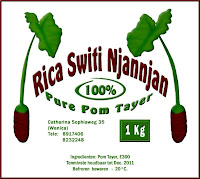
The development work is going well. The business to grate and package pom tayer is up and running. The brothers who started the business received an operating loan from a local credit union, purchased processing equipment, packaging materials and their first order of unprocessed produce. They've begun to sell 1 kilo packages to retail outlets. Sales are a little slow right now because retailers want to see how the product initially sells before buying in bulk. Buyers are already placing larger orders. Pom tayer is a variety of taro, which is used in Hawaii to make poi. There are several varieties of tayer grown here, but pom tayer is the most common. We are really pleased that this project is up and running. It could have a big impact not only for the entrepreneurs, but also the local growers as it provides them a more competitive market for selling their produce. This is huge because right now as no one is buying pom tayer, so there is very little farm revenue coming into the village.
The water improvement project is moving slowly. Nine new platforms for rainwater catchment tanks have been built at selected households, but the installations have not been completed due to delays in funding. Speaking of money begs the question of where does donated money actually end up? Well, ideally, the water board would have a bank account where income and outgo can be easily tracked. So our dutiful organization has attempted to open one. Much, much easier said than done. One would think opening an account and depositing money would be something banks would encourage but this does not seem to be the case since this process has been underway for several months. Something more always seems to be needed for the bank to be willing to open an account in their name.
Fortunately, things have settled down in the village for our new Kapiten. His father has come to a much more open and accepting position regarding his son's choice and did a few sermons on being more cautious about passing judgment on others. This is very fortunate for our Kapiten as he has been pretty overwhelmed in his new job. Along with the catch up work from being four years without a Kapiten, there have been several deaths recently. Deaths involve ritual and the Kapiten - as the community leader - must prepare and participate in all facets of these rituals. The church/traditional split in the village tends to make these events more stressful in general. Also, families of the deceased do not always agree (hard to imagine) as to the proper way of things and he is called upon to settle these issues - which can get messy.
The whole village suffered a big loss with the demise of our beloved generator. During an all-nighter (one of the parties that go until day break in the aftermath of a death) sparky lost his battle with BTU's due to a pernicious leak in life-sustaining radiator fluid. From now on, wakes and everything else will be sans electrons except for those lucky few with back-up generators (not us). Other generic news includes David/Christine health report - David is holding steady at a healthy 152lbs, about 30 under arrival weight - lighter, probably weaker but a hell of a lot tougher. Christine's skin continues to do battle with her immune system and unfortunately, the immune system is winning. Very difficult for her to do routine housework because her hands are the primary victim in the histamine assault. But she's hanging in which shows she's tougher than David.

The development work is going well. The business to grate and package pom tayer is up and running. The brothers who started the business received an operating loan from a local credit union, purchased processing equipment, packaging materials and their first order of unprocessed produce. They've begun to sell 1 kilo packages to retail outlets. Sales are a little slow right now because retailers want to see how the product initially sells before buying in bulk. Buyers are already placing larger orders. Pom tayer is a variety of taro, which is used in Hawaii to make poi. There are several varieties of tayer grown here, but pom tayer is the most common. We are really pleased that this project is up and running. It could have a big impact not only for the entrepreneurs, but also the local growers as it provides them a more competitive market for selling their produce. This is huge because right now as no one is buying pom tayer, so there is very little farm revenue coming into the village.
The water improvement project is moving slowly. Nine new platforms for rainwater catchment tanks have been built at selected households, but the installations have not been completed due to delays in funding. Speaking of money begs the question of where does donated money actually end up? Well, ideally, the water board would have a bank account where income and outgo can be easily tracked. So our dutiful organization has attempted to open one. Much, much easier said than done. One would think opening an account and depositing money would be something banks would encourage but this does not seem to be the case since this process has been underway for several months. Something more always seems to be needed for the bank to be willing to open an account in their name.
Fortunately, things have settled down in the village for our new Kapiten. His father has come to a much more open and accepting position regarding his son's choice and did a few sermons on being more cautious about passing judgment on others. This is very fortunate for our Kapiten as he has been pretty overwhelmed in his new job. Along with the catch up work from being four years without a Kapiten, there have been several deaths recently. Deaths involve ritual and the Kapiten - as the community leader - must prepare and participate in all facets of these rituals. The church/traditional split in the village tends to make these events more stressful in general. Also, families of the deceased do not always agree (hard to imagine) as to the proper way of things and he is called upon to settle these issues - which can get messy.
Tuesday, July 6, 2010
July, 2010
There has been a lot going on in the village and in Suriname at large over the last couple of months. On the development work front, a local company has sponsored the installation of several rain catchment tanks and provided the village with a cassava mill. This latter item grates cassava into “flour” (not really flour, it’s wet and sticky but it’s what they squeeze, dry and make bread and kwaka from). This otherwise difficult and painful work is done by hand on a piece of metal nailed to a wooden board. The metal is perforated to create a grating surface. Although the mill will make things easier, the nutritional value of the resulting cassava will be reduced slightly due to the lack of blood and fingertips that otherwise provide a small amount of protein when using the manual method. The rainwater tank project has been interesting. The number of tanks we’ll receive from this company is far less than the total needed for the village (we’ve applied to other international support organizations for the whole project) so the process of deciding who would get these first tanks had the potential to be a bit dicey. Fortunately, our water board was up to the task. First, they decided that each of our 8 neighborhoods would get 1 tank. Then each neighborhood rep on the board was asked to pick someone to receive the tank. Initially one or two thought that board members should get them but this was quickly nixed as setting a bad precedent. The criteria loosely established were that the recipients should be those who first – didn’t already have a tank, second – be older folks with less potential for earning money to buy a tank themselves, third – have a large number of kids in the house. Candidates were quickly selected and the board then held a town meeting to announce the results, their reasoning and to see if there were objections. The water board rocks.
Our village is also in the throes of selecting a new Kapiten. Kapitens are village leaders (who are paid a small stipend by the government) that have traditionally resolved disputes, made community decisions, and generally provided leadership to bush communities. The Kapiten tradition goes all the way back to the founding of maroon communities when they first escaped slavery some 300 years ago. As such, the “confirmation” process is steeped in traditional ritual, which is proving to be a bit of a problem this time around. The position of Kapiten is hereditary in a fairly unusual way – the eldest son of the eldest sister of the current Kapiten is the person in line to become the new Kapiten. In our village, this woman married the local Christian preacher and both she and obviously her husband have renounced most traditional ritual as heathen craziness certain to lead all participants directly to hell. “No son of ours, etc…” This has led to a four year hiatus in the Kapitency which is not particularly good for the community as a whole. In the case of our village, it is actually the fourth son who has been “nominated” to become Kapiten. The oldest brother had a traumatic brain injury as a child and cannot serve; the next two brothers live in the city and are as opposed as their parents to “unchristian” ritual. So brother four has stepped up and will become Kapiten, and this has created quite a rift between he and his parents (his brothers seem to be OK with it), and between the “churchies” and the “heathens” in the community at large. Church last Sunday was pyrotechnic with all the protestations and boisterously voiced concerns for brother four’s immortal soul. But he himself is a great guy and we think will make a fine Kapiten. We’re very impressed that he has the fortitude to go through this tribulation basically for the good of the community.
Suriname just had an election. The process was pretty impressive even if the result was a little unsettling. A group from the government election agency came to our village, showed people how to vote, hung out all day and then publicly counted every ballot. They physically showed every ballot while they were counting. Apparently they do this in every village and in neighborhoods in the city. A very remarkable display of democracy. Unfortunately, just because you have a good process doesn't mean you'll get a good result. The "winner" - they have a parliamentary system so they must form a coalition government, so no guarantee he'll become president but his party got the most seats - is a former dictator here who is a convicted drug smuggler and is currently on trial for murder. One early coalition had him paired with his former military rival during this country’s civil war in the 80’s who also has an international warrant for his arrest on similar drug charges. Neither can leave the country without fear of immediate incarceration. A third leading political figure is a convicted sex offender. American politicians don’t have anything on these guys – other than we rarely actually convict our politicians of crimes. In the month and a half since the actual vote, coalitions have formed, dissolved and reformed and as yet there is still no president. Since it’s unlikely that any coalition will get 2/3 of the seats necessary to install the president, a lower governing body of “state” and “county” representatives will likely vote to select the president. The process is pretty confusing to us uninitiated Americans but it’s been fascinating to watch.
Our village is also in the throes of selecting a new Kapiten. Kapitens are village leaders (who are paid a small stipend by the government) that have traditionally resolved disputes, made community decisions, and generally provided leadership to bush communities. The Kapiten tradition goes all the way back to the founding of maroon communities when they first escaped slavery some 300 years ago. As such, the “confirmation” process is steeped in traditional ritual, which is proving to be a bit of a problem this time around. The position of Kapiten is hereditary in a fairly unusual way – the eldest son of the eldest sister of the current Kapiten is the person in line to become the new Kapiten. In our village, this woman married the local Christian preacher and both she and obviously her husband have renounced most traditional ritual as heathen craziness certain to lead all participants directly to hell. “No son of ours, etc…” This has led to a four year hiatus in the Kapitency which is not particularly good for the community as a whole. In the case of our village, it is actually the fourth son who has been “nominated” to become Kapiten. The oldest brother had a traumatic brain injury as a child and cannot serve; the next two brothers live in the city and are as opposed as their parents to “unchristian” ritual. So brother four has stepped up and will become Kapiten, and this has created quite a rift between he and his parents (his brothers seem to be OK with it), and between the “churchies” and the “heathens” in the community at large. Church last Sunday was pyrotechnic with all the protestations and boisterously voiced concerns for brother four’s immortal soul. But he himself is a great guy and we think will make a fine Kapiten. We’re very impressed that he has the fortitude to go through this tribulation basically for the good of the community.
Suriname just had an election. The process was pretty impressive even if the result was a little unsettling. A group from the government election agency came to our village, showed people how to vote, hung out all day and then publicly counted every ballot. They physically showed every ballot while they were counting. Apparently they do this in every village and in neighborhoods in the city. A very remarkable display of democracy. Unfortunately, just because you have a good process doesn't mean you'll get a good result. The "winner" - they have a parliamentary system so they must form a coalition government, so no guarantee he'll become president but his party got the most seats - is a former dictator here who is a convicted drug smuggler and is currently on trial for murder. One early coalition had him paired with his former military rival during this country’s civil war in the 80’s who also has an international warrant for his arrest on similar drug charges. Neither can leave the country without fear of immediate incarceration. A third leading political figure is a convicted sex offender. American politicians don’t have anything on these guys – other than we rarely actually convict our politicians of crimes. In the month and a half since the actual vote, coalitions have formed, dissolved and reformed and as yet there is still no president. Since it’s unlikely that any coalition will get 2/3 of the seats necessary to install the president, a lower governing body of “state” and “county” representatives will likely vote to select the president. The process is pretty confusing to us uninitiated Americans but it’s been fascinating to watch.
Thursday, April 22, 2010
A Trip to Market
After several months of working at grounds with the folks of our village, David finally got an opportunity to see how produce is sold in the big city of Paramaribo. This happened as a result of meticulous planning, detailed discussion and precise logistics (a meeting got moved and David was desperate for a ride on short notice). Late Sunday night, we loaded a van with dozens of 50 kilo sacks of ginger and pom tayer. There were many people loading items and weighing sacks (50 kilos with a hand held scale – don’t try this at home) and it was very unclear how they knew whose stuff was whose. This of course did not leave any room for passengers and barely enough room for the driver so another van with about ten of us hit the road at about midnight. This road is “under construction” so it doesn’t make for the smoothest of rides. Several times it looked like someone would be launched through the roof from taking the pot holes a little too fast. After about 2 and a half hours and with our internal organs adjusted to a slightly new orientation, we got to the big “wowoyo” or market. Apparently (and obviously if you think about it) we were not the only ones making this late night sojourn. The place was swarming with people. We unloaded our cargo, talked to a few people from surrounding villages and proceeded to wait for the buyers to show up at about 5:30 or 6 in the morning. The mystery of ownership of each sack of produce unraveled when David saw that each grower used a different color twine to sew their bags shut. Several folks slept in the van for a couple of hours and David tried this also but with little of the intended effect. Apparently the driver was very well known and popular and every time David almost nodded off, someone from outside the van would bang on the side of the door and shout his (the driver’s) name. He would talk with them for a few minutes and would be asleep again within 30 seconds of the end of the conversation. Clearly an acquired skill. After selling everything, which happened pretty quickly, everybody loads up and heads back to the village. Apparently this happens a couple of times a week and even happened before the road was built. Then everything got loaded onto boats first and then transferred to vans in Moengo.
We are now providing more English lessons in Moengo through a local non-profit organization there. It’s a great program that teaches skills for working in an office. English is just one module and the program includes improving their Dutch, learning internet skills and spreadsheet and word processing software. The program also tries to find work for the graduates in local offices at the end of the class. It’s been a lot of fun for both of us.
We are now providing more English lessons in Moengo through a local non-profit organization there. It’s a great program that teaches skills for working in an office. English is just one module and the program includes improving their Dutch, learning internet skills and spreadsheet and word processing software. The program also tries to find work for the graduates in local offices at the end of the class. It’s been a lot of fun for both of us.
Saturday, March 6, 2010
Settling in
So, it’s been awhile since our last update and that reflects that our lives have become a little more routine. The “newness” of life for us here is wearing away and things are settling. We typically wake up, eat, clean up around the house and yard and then visit, work at grounds (although this is happening less because this time of year there isn’t a lot to do) and read. We go to Moengo once or twice a week on our bicycles – about a 30 – 45 minute ride – to buy food, go to lunch, hang out, etc. It’s a pretty laid back lifestyle. Some domestic activities still provide the chance to thrill and excite. After months of practice, Christine can now carry a full, large bucket on her head (see photo) all the way to the river without using her hands! The learning process has given the local women no end of amusement but this hasn’t daunted her enthusiasm.
As for the development work, it has also slowed down. Early on, there was a big pulse of activity in helping to organize the village, discussing wants and needs, collecting baseline information, finding potential sponsors, writing up proposals, etc. The proposals are mostly in and we are in “wait for money” mode.
Some new stuff is still going on. We’ve started giving English lessons which has been a lot of fun. We each give 2 – 4 lessons a week. We’ve split into two classes. Christine teaches those with virtually no exposure to English while David has people who have learned some English in school or at work. It’s very interesting to see how the more advanced group has been taught English. Many actually know a lot of words and phrases but because it has all be book learning and they’ve had very little chance to talk in English, they can’t actually speak a lick! It’s taken several classes to figure this out so David has just recently shifted his focus away from memorization and towards more conversation in class. Christine focuses most on inspiring confidence, increasing self esteem and having fun. Many of her class members are women who, for a variety of reasons, did not attend school at all. It’s a real thrill to see their excitement when someone responds correctly in class. Christine is also working privately with two young women who approached her for assistance in learning to read. Using materials from one of the local missionaries, she is teaching them in the local language. It’s going really well as they are both fast learners.
As for the development work, it has also slowed down. Early on, there was a big pulse of activity in helping to organize the village, discussing wants and needs, collecting baseline information, finding potential sponsors, writing up proposals, etc. The proposals are mostly in and we are in “wait for money” mode.
Some new stuff is still going on. We’ve started giving English lessons which has been a lot of fun. We each give 2 – 4 lessons a week. We’ve split into two classes. Christine teaches those with virtually no exposure to English while David has people who have learned some English in school or at work. It’s very interesting to see how the more advanced group has been taught English. Many actually know a lot of words and phrases but because it has all be book learning and they’ve had very little chance to talk in English, they can’t actually speak a lick! It’s taken several classes to figure this out so David has just recently shifted his focus away from memorization and towards more conversation in class. Christine focuses most on inspiring confidence, increasing self esteem and having fun. Many of her class members are women who, for a variety of reasons, did not attend school at all. It’s a real thrill to see their excitement when someone responds correctly in class. Christine is also working privately with two young women who approached her for assistance in learning to read. Using materials from one of the local missionaries, she is teaching them in the local language. It’s going really well as they are both fast learners.
Monday, January 11, 2010
A Death in the Village
An old woman died in the village a few days ago (12/27/09). She was one of the matriarchs here and has 9 children living in the village, and virtually countless grand and grand-grandchildren. All normal activity came to a halt and the village began to mourn her. She did not go to the Baptist church here so the mourning was very traditional which has been influenced little by the church. Dozens of people gathered in the “dead house” to tell stories about her and her life, followed by music and dancing all night long.
The second day, many more people arrived in the village and the body was prepared for burial. After washing, the body was placed in a coffin and then wrapped in colorful folded bolts of cloth, leaving her face exposed. She was covered with perfume and baby powder so as to make her rest very comfortable. The coffin was then sealed and placed on a pedestal in the dead house and a hammock hung in front of it so family could sleep next to her a last time. Then there was another night of music, drinking and dancing (which would make sleeping next to the body somewhat improbable) with many libations made to the deceased. This is done with palm “rum” which is 90% (180 proof) alcohol, cut with a little water. A small amount is first poured on the ground for the one who passed and the rest is consumed. It’s hard to say one drinks this stuff because half of it volatilizes before you can swallow (thankfully). We made to about 2 in the morning which is when many of the older (and wiser, it turns out…they were sleeping from about 7 til 2) folks came to party literally until the sun comes up.
The burial day was two days later and we were invited to attend. The body is carried from the dead house to a boat and this is when most of the crying and wailing occur. Women especially wail and yell their sorrow at the passing of their loved one. Village elders and close family ride in the boat with the coffin and another boat for the rest of us followed. We were all admonished before we left to finish crying before starting the actual burial. All sorrow was to be left in the river. A colorful flag was flown on the coffin boat and several shotgun volleys were fired to announce the passing. Upon arrival at the burial place, a path was cleaned where the coffin was to pass. It was placed just outside the boat while a proper burial site was selected and the grave was dug. All people for whom this was a first burial were asked to identify themselves. We didn’t think much of this at the time…As the hole was dug, several rituals were performed and more stories told. Overall it was a happy gathering with people laughing and enjoying each other’s presence. When the hole was finished, the first timers were told that their eyes must be opened in order to not fear the spirits of the dead. They then tied each newcomer to a small post in front of the grave by means of a vine slipped over their wrist. Then the above mentioned “rum” was poured onto some leaves and squeezed from the leaves into our eyes. As you can imagine, this was fairly painful. Fortunately, right after they try to blind you, they flush your eyes with water (also squeezed from the same leaves). Then, while you’re still tied by one wrist, they beat you with sticks and you’re supposed to fight back and try to hit the people hitting you. The “beating” has become ritualized so you could barely feel it (especially compared to the fire burning toward our brains from our eye sockets), but when some of the older guys had their eyes “re-opened”, the beating got a lot more serious. After this, the coffin was lowered into the ground and various additional rites were performed. The whole burial took about 6 hours.
The woman who died was always very kind to us and welcomed us to sit and talk with her whenever we passed her house. She would help us with language and was gentle in her teaching. Although we didn’t know her well, it was surprising how strongly we felt at her passing. Clearly nothing like what the villagers were feeling, but the sense of loss is palpable and the pain felt by the people we do know more closely has rippled through us as well.
The second day, many more people arrived in the village and the body was prepared for burial. After washing, the body was placed in a coffin and then wrapped in colorful folded bolts of cloth, leaving her face exposed. She was covered with perfume and baby powder so as to make her rest very comfortable. The coffin was then sealed and placed on a pedestal in the dead house and a hammock hung in front of it so family could sleep next to her a last time. Then there was another night of music, drinking and dancing (which would make sleeping next to the body somewhat improbable) with many libations made to the deceased. This is done with palm “rum” which is 90% (180 proof) alcohol, cut with a little water. A small amount is first poured on the ground for the one who passed and the rest is consumed. It’s hard to say one drinks this stuff because half of it volatilizes before you can swallow (thankfully). We made to about 2 in the morning which is when many of the older (and wiser, it turns out…they were sleeping from about 7 til 2) folks came to party literally until the sun comes up.
The burial day was two days later and we were invited to attend. The body is carried from the dead house to a boat and this is when most of the crying and wailing occur. Women especially wail and yell their sorrow at the passing of their loved one. Village elders and close family ride in the boat with the coffin and another boat for the rest of us followed. We were all admonished before we left to finish crying before starting the actual burial. All sorrow was to be left in the river. A colorful flag was flown on the coffin boat and several shotgun volleys were fired to announce the passing. Upon arrival at the burial place, a path was cleaned where the coffin was to pass. It was placed just outside the boat while a proper burial site was selected and the grave was dug. All people for whom this was a first burial were asked to identify themselves. We didn’t think much of this at the time…As the hole was dug, several rituals were performed and more stories told. Overall it was a happy gathering with people laughing and enjoying each other’s presence. When the hole was finished, the first timers were told that their eyes must be opened in order to not fear the spirits of the dead. They then tied each newcomer to a small post in front of the grave by means of a vine slipped over their wrist. Then the above mentioned “rum” was poured onto some leaves and squeezed from the leaves into our eyes. As you can imagine, this was fairly painful. Fortunately, right after they try to blind you, they flush your eyes with water (also squeezed from the same leaves). Then, while you’re still tied by one wrist, they beat you with sticks and you’re supposed to fight back and try to hit the people hitting you. The “beating” has become ritualized so you could barely feel it (especially compared to the fire burning toward our brains from our eye sockets), but when some of the older guys had their eyes “re-opened”, the beating got a lot more serious. After this, the coffin was lowered into the ground and various additional rites were performed. The whole burial took about 6 hours.
The woman who died was always very kind to us and welcomed us to sit and talk with her whenever we passed her house. She would help us with language and was gentle in her teaching. Although we didn’t know her well, it was surprising how strongly we felt at her passing. Clearly nothing like what the villagers were feeling, but the sense of loss is palpable and the pain felt by the people we do know more closely has rippled through us as well.
Thursday, November 26, 2009
Thanksgiving 2009
We came into town for Thanksgiving at the US Ambassador's home. The Ambassador and his wife did an excellent job of making us all feel at home. Dinner was just like home and we over ate which is required on Thanksgiving. David got to watch some American football. There is a pub near the Peace Corps office that has tapped into our little market. He opens up special for Peace Corps when American football is on. Now, to Peace Corps work related details:
We're beginning to feel fairly settled in our new life here. We've gotten to know the people a little better and the language well enough that we have started doing some project work. The people in the village have been really friendly and supportive. Working at grounds with them has been a great way to build trust, acceptance and friendship. At first the folks were very leery about having us work with them. A combination of thinking we couldn't do it, we'd hurt ourselves (or maybe even them), and/or they'd have to pay us made them very reluctant to take us with them. Now that we've shown that we can work hard, not maim anyone and actually contribute, we're getting more requests than we can handle. David tries to go about 2 times a week with different folks. He's "booked" through the new year, even though there is a payment required - one cold Parbo (local beer) after work. One more note on the work - did we mention that it's really hard? Any more than twice a week and David would be a physical wreck. It doesn't let up because you're old either. They do have a minimal social security type payment after age 60 but it's not enough to live on so all the old folks still go to grounds.
Clean drinking water is a big issue in many of the villages in the interior of Suriname so we hope to get a project going along those lines. We had our first big village meeting to talk about what they want and how to go about getting it. It was very well attended which was both surprising and gratifying. We thought it would take about 15 minutes to essentially get the go-ahead to create a water committee to look into the details of what we needed to do. About 2 1/2 hours later we finally circled the wagons back around to creating a water board. We now have one. A lot of the stuff that went on for the 2+ hours of the meeting in between the beginning and the end is still a little fuzzy for us but it was certainly very lively. As in most small, close-knit communities, the people have a lot of history with each other and some of that came bubbling up. It was actually kind of affirming for us in that they were comfortable talking about some sensitive local politics in front of us...they probably thought we didn't understand what they were saying which was about 50% true. One good thing about Suriname is that there is plenty of water (unlike more arid third-world places where water quantity as well as quality is an issue). The quantity problem here is that they have a 3-4 month dry season when it rains very little (it's just ending now). So when looking at rainwater harvesting as a clean water source (a very attractive option given the difficulties with most aspects of maintaining bigger or more complex systems), reservoirs need to be sized for the dry season. There are also a couple of guys from the village that want to start their own business processing pom taya (see last blog post). They're very motivated and it's been really fun helping them get a business plan together. Many folks are also interested in learning English so we'll be starting lessons after the new year. Apparently there is a little break in the farming work beginning in January so people will have a little more time to attend a class or two a week. So there's a lot going on in the jungle right now. One of our fears was that we might not have anything to fill our time...not an issue.
The current big news is the opening of a road from the main town right to our village. Up until now, our village has been accessible only by boat. This is a great thing for the community - much easier and safer access to health care, school, and shopping. This road comes right in time for the upcoming national elections. Hopefully it will be maintained adequately and not wash away in the first rainy season - we'll find out soon. Unfortunately, the road runs right next to one side of our house, and, while the villagers seem to place little value on privacy – (they live very close together and think we should cut down the few bushes left that separate us from the road) we’re still adjusting to the “fishbowl” style of community living.
Speaking of elections, we had our first campaign event in our village to ensure we knew who was responsible to getting us our road. A local politician held a rally last weekend complete with lengthy campaign speeches, lots of food, a live band and dancing. We did not attend, however, as Peace Corps asks that volunteers not participate in any political events to prevent the appearance of support to one or another political party.
That's about it for now. We will be back in the city for Christmas and will post new pictures then.
We're beginning to feel fairly settled in our new life here. We've gotten to know the people a little better and the language well enough that we have started doing some project work. The people in the village have been really friendly and supportive. Working at grounds with them has been a great way to build trust, acceptance and friendship. At first the folks were very leery about having us work with them. A combination of thinking we couldn't do it, we'd hurt ourselves (or maybe even them), and/or they'd have to pay us made them very reluctant to take us with them. Now that we've shown that we can work hard, not maim anyone and actually contribute, we're getting more requests than we can handle. David tries to go about 2 times a week with different folks. He's "booked" through the new year, even though there is a payment required - one cold Parbo (local beer) after work. One more note on the work - did we mention that it's really hard? Any more than twice a week and David would be a physical wreck. It doesn't let up because you're old either. They do have a minimal social security type payment after age 60 but it's not enough to live on so all the old folks still go to grounds.
Clean drinking water is a big issue in many of the villages in the interior of Suriname so we hope to get a project going along those lines. We had our first big village meeting to talk about what they want and how to go about getting it. It was very well attended which was both surprising and gratifying. We thought it would take about 15 minutes to essentially get the go-ahead to create a water committee to look into the details of what we needed to do. About 2 1/2 hours later we finally circled the wagons back around to creating a water board. We now have one. A lot of the stuff that went on for the 2+ hours of the meeting in between the beginning and the end is still a little fuzzy for us but it was certainly very lively. As in most small, close-knit communities, the people have a lot of history with each other and some of that came bubbling up. It was actually kind of affirming for us in that they were comfortable talking about some sensitive local politics in front of us...they probably thought we didn't understand what they were saying which was about 50% true. One good thing about Suriname is that there is plenty of water (unlike more arid third-world places where water quantity as well as quality is an issue). The quantity problem here is that they have a 3-4 month dry season when it rains very little (it's just ending now). So when looking at rainwater harvesting as a clean water source (a very attractive option given the difficulties with most aspects of maintaining bigger or more complex systems), reservoirs need to be sized for the dry season. There are also a couple of guys from the village that want to start their own business processing pom taya (see last blog post). They're very motivated and it's been really fun helping them get a business plan together. Many folks are also interested in learning English so we'll be starting lessons after the new year. Apparently there is a little break in the farming work beginning in January so people will have a little more time to attend a class or two a week. So there's a lot going on in the jungle right now. One of our fears was that we might not have anything to fill our time...not an issue.
The current big news is the opening of a road from the main town right to our village. Up until now, our village has been accessible only by boat. This is a great thing for the community - much easier and safer access to health care, school, and shopping. This road comes right in time for the upcoming national elections. Hopefully it will be maintained adequately and not wash away in the first rainy season - we'll find out soon. Unfortunately, the road runs right next to one side of our house, and, while the villagers seem to place little value on privacy – (they live very close together and think we should cut down the few bushes left that separate us from the road) we’re still adjusting to the “fishbowl” style of community living.
Speaking of elections, we had our first campaign event in our village to ensure we knew who was responsible to getting us our road. A local politician held a rally last weekend complete with lengthy campaign speeches, lots of food, a live band and dancing. We did not attend, however, as Peace Corps asks that volunteers not participate in any political events to prevent the appearance of support to one or another political party.
That's about it for now. We will be back in the city for Christmas and will post new pictures then.
Tuesday, September 29, 2009
Life in our new home
We’re in it now. We’ve been in our village for almost two months. We have spent a lot of time getting our house in order. It hadn’t been lived in by anything but jungle critters for about 3 years so we had to do some major scrubbing down of the walls, existing furnishings and the floor to remove the bat odor, etc. David has been doing some creative carpentry to create screens for all our windows so we can leave them open without being chewed up by mosquitoes. They are working really well and have made the evenings and nights pleasant. David is now working on getting rid of the bat colony living in our rafters. They are quite attached to our home and have been reluctant to leave despite the addition of daylight and some insecticide. David is now installing a heavy duty screen over the openings into the space between the ceiling and the roof. We just have to figure out how to get them to leave before closing up the space completely. We don’t want to create a bat crypt.
Christine spends much of her time fighting to keep our spot in the jungle. The jungle is constantly trying to take the space back. It’s a process of cleaning to keep the multitude of visiting insects and small creatures from setting up camp and staying permanently. Every day requires sweeping the home and washing every dirtied dish in the river. The river is ¼ mile from the house. It’s a lovely walk in the early mornings, unless you’re carrying a full load of dishes and laundry to be washed.
Christine is also reluctantly learning to cook. It just has to be done. The women do the cooking and they talk about it a lot. She is always being asked what she cooked today – then they want details. Damn! To distract them from real food, she has started making cookies and cake and sharing liberally. Now she is more often asked if she is cooking anything sweet today. She has had several women over for cooking lessons to prepare these delights, the most popular being “No bake chocolate cookies”. Good thing, too. Baking here is a late night only activity due to the heat and most households don’t have ovens.
As for life away from the house, we spend our time visiting, working and making a map of the village. The people here are mostly subsistence farmers and it is basic slash and burn agriculture. It’s really hard work – cut the jungle, burn it, muck out the stumps and plant crops. Then, 9-10 months later, harvest and haul to town to sell (weeding in-between). David has helped with this several times and has started our own small “grounds” close to the house - see new pics. Our grounds will be some leafy greens, cucumber, a long string bean called kosubanti and a really tasty squash called pompun (pumpkin). Villagers here grow mostly root vegetables, bananas (several varieties), blisteringly hot peppers, ginger and some greens. The staple is definitely the root vegetables however, cassava being the primary one. Bread, dumplings and a dried cereal much like grape nuts (kwaka) are the main consumables made from cassava. Christine has learned how to cook the bread – see new pics (making the “dough” is actually quite involved). The cassava bread and kwaka have an amazingly long shelf life considering the environment. The cooking process essentially drives all the water out of the cassava and it can last for several months in this condition. They grow another root vegetable called pom taya. This is the main cash crop this time of year. A dish called pom (not surprisingly) is made from this and apparently it is very popular in here and in Holland.
We haven’t started any specific project work yet. We’re still getting to know the community and the people. Peace Corps does not want volunteers to start project work until they have been at site for at least three months so they have a good feel for the community they are in. We think the map should help with most any kind of project work however because it provides good baseline info for a variety things and has definitely been a good conversation starter around the village. We’ve also gotten several kids to help out with the tape and compass. I’m sure our NPS, FHWA and USFS friends will not be too surprised that David brought rudimentary survey gear into the Suriname jungle – and he’s using it!
Finally, children continue to play a huge role in our integration. We spend a lot of time with children of all ages, both one on one and in large groups…sometimes too large. Unfortunately, even the children suffer from our linguistic shortcomings. David recently refused to return one boy’s headphones, mistakenly thinking he wanted our ipod that went along with them. So the poor lad is music deprived for a couple of days while we’re in the city.
Christine spends much of her time fighting to keep our spot in the jungle. The jungle is constantly trying to take the space back. It’s a process of cleaning to keep the multitude of visiting insects and small creatures from setting up camp and staying permanently. Every day requires sweeping the home and washing every dirtied dish in the river. The river is ¼ mile from the house. It’s a lovely walk in the early mornings, unless you’re carrying a full load of dishes and laundry to be washed.
Christine is also reluctantly learning to cook. It just has to be done. The women do the cooking and they talk about it a lot. She is always being asked what she cooked today – then they want details. Damn! To distract them from real food, she has started making cookies and cake and sharing liberally. Now she is more often asked if she is cooking anything sweet today. She has had several women over for cooking lessons to prepare these delights, the most popular being “No bake chocolate cookies”. Good thing, too. Baking here is a late night only activity due to the heat and most households don’t have ovens.
As for life away from the house, we spend our time visiting, working and making a map of the village. The people here are mostly subsistence farmers and it is basic slash and burn agriculture. It’s really hard work – cut the jungle, burn it, muck out the stumps and plant crops. Then, 9-10 months later, harvest and haul to town to sell (weeding in-between). David has helped with this several times and has started our own small “grounds” close to the house - see new pics. Our grounds will be some leafy greens, cucumber, a long string bean called kosubanti and a really tasty squash called pompun (pumpkin). Villagers here grow mostly root vegetables, bananas (several varieties), blisteringly hot peppers, ginger and some greens. The staple is definitely the root vegetables however, cassava being the primary one. Bread, dumplings and a dried cereal much like grape nuts (kwaka) are the main consumables made from cassava. Christine has learned how to cook the bread – see new pics (making the “dough” is actually quite involved). The cassava bread and kwaka have an amazingly long shelf life considering the environment. The cooking process essentially drives all the water out of the cassava and it can last for several months in this condition. They grow another root vegetable called pom taya. This is the main cash crop this time of year. A dish called pom (not surprisingly) is made from this and apparently it is very popular in here and in Holland.
We haven’t started any specific project work yet. We’re still getting to know the community and the people. Peace Corps does not want volunteers to start project work until they have been at site for at least three months so they have a good feel for the community they are in. We think the map should help with most any kind of project work however because it provides good baseline info for a variety things and has definitely been a good conversation starter around the village. We’ve also gotten several kids to help out with the tape and compass. I’m sure our NPS, FHWA and USFS friends will not be too surprised that David brought rudimentary survey gear into the Suriname jungle – and he’s using it!
Finally, children continue to play a huge role in our integration. We spend a lot of time with children of all ages, both one on one and in large groups…sometimes too large. Unfortunately, even the children suffer from our linguistic shortcomings. David recently refused to return one boy’s headphones, mistakenly thinking he wanted our ipod that went along with them. So the poor lad is music deprived for a couple of days while we’re in the city.
Monday, August 3, 2009
Marooned in the City
We’ve been in Paramaribo for 10 days which has been both a blessing and a curse. After swearing-in, we thought we would be heading out to site – after shopping for all the gear, furniture, tools, etc. we’ll need for setting up our household – the 1st of August. Peace Corps gave us more time than in previous years to buy all the stuff we’d need (we’d been in the city a few days before swear-in). This was a very good thing since some of our transactions didn’t work out the way several of us intended (paying for stuff that wasn’t delivered, getting delivery on stuff we didn’t order, etc), and this gave us time to resolve these issues (which we were able to do). But we didn’t leave on the first because we have no money for food. We get a quarterly stipend for food purchases (supposed to get) which apparently got lost in the mail on the way from Washington DC. At any rate, there’s no food money so there keeping us in town until at least Wednesday the 5th.
Paramaribo is a nice city so it’s not a tremendous hardship. Food and beer are good, people are generally friendly and accommodations are comfortable. It’s also fairly easy to get a good internet connection. The problem again is money. It’s not an expensive place by U.S. standards but our PC per diem is pretty meager. It’s enough for 3 meals a day (if you’re careful) but if you do happen to have a beer, or god forbid two, it’s bread and water for a day…so David has definitely lost a little weight. Also, we’re pretty anxious to get out to our site. The little bit of language we have is getting rusty already. The language of the business community is Dutch so most businesses expect people (especially white people) to speak Dutch. The street language is fairly close to the Okanisi we’ve been learning but there are definitely differences. David bought chairs today from a woman who spoke no English and they have four legs and a place to put your rear so he must have been talking ok.
Paramaribo is a nice city so it’s not a tremendous hardship. Food and beer are good, people are generally friendly and accommodations are comfortable. It’s also fairly easy to get a good internet connection. The problem again is money. It’s not an expensive place by U.S. standards but our PC per diem is pretty meager. It’s enough for 3 meals a day (if you’re careful) but if you do happen to have a beer, or god forbid two, it’s bread and water for a day…so David has definitely lost a little weight. Also, we’re pretty anxious to get out to our site. The little bit of language we have is getting rusty already. The language of the business community is Dutch so most businesses expect people (especially white people) to speak Dutch. The street language is fairly close to the Okanisi we’ve been learning but there are definitely differences. David bought chairs today from a woman who spoke no English and they have four legs and a place to put your rear so he must have been talking ok.
Sunday, August 2, 2009
Photos posted
After a joint effort and much patience, we believe we have successfully posted pictures to this web blog. If you're on facebook with Christine, you've already seen these pictures.
As for updated news, we're official Peace Corps volunteers. For our swearing in ceremony, Christine served as the presenter for all the volunteers learning Okanisi (also called Aucan). In this extremely diverse country, volunteers were split into three - a bridge language for all the different groups. Anyway, Christine prepared her speech with the assistance of her language teacher while still in training. Then, when we arrived in the city, the director informed all the presentors that we needed to lengthen our presentations.
Christine typing: So I added some simple transition lines and expanded my thank you to all the villagers in the training region. This made for a very memorable speech as I added a line stating that I love to sew, so my host family taught me to sew blah, blah. blah. I declared with gusto that I love to sew and everyone laughed. I was puzzled and racking my brain. I knew I pronounced everything correctly as it is a simple sentence. Then, I suddenly remembered - the word for sew, 'nai' is also the word for sex. To recover, I said it again and emphasized the sewing part by gesturing as if I was using a needle to sew on material. Not very effective, but again, very funny. I then added that I love to nai - both types - and went on. As a little side note, several reporters, including the local TV news station, were there to capture this moment. On the bright side, no one remembers all the mispronouncations or english words I accidently spit out while talking and everyone liked my speech.
We're in the capital city until Wednesday am and will be checking email and our blog until we leave. Then we're off the grid again for three months or so. Hope you are all well and enjoying the miracle of refridgeration.
As for updated news, we're official Peace Corps volunteers. For our swearing in ceremony, Christine served as the presenter for all the volunteers learning Okanisi (also called Aucan). In this extremely diverse country, volunteers were split into three - a bridge language for all the different groups. Anyway, Christine prepared her speech with the assistance of her language teacher while still in training. Then, when we arrived in the city, the director informed all the presentors that we needed to lengthen our presentations.
Christine typing: So I added some simple transition lines and expanded my thank you to all the villagers in the training region. This made for a very memorable speech as I added a line stating that I love to sew, so my host family taught me to sew blah, blah. blah. I declared with gusto that I love to sew and everyone laughed. I was puzzled and racking my brain. I knew I pronounced everything correctly as it is a simple sentence. Then, I suddenly remembered - the word for sew, 'nai' is also the word for sex. To recover, I said it again and emphasized the sewing part by gesturing as if I was using a needle to sew on material. Not very effective, but again, very funny. I then added that I love to nai - both types - and went on. As a little side note, several reporters, including the local TV news station, were there to capture this moment. On the bright side, no one remembers all the mispronouncations or english words I accidently spit out while talking and everyone liked my speech.
We're in the capital city until Wednesday am and will be checking email and our blog until we leave. Then we're off the grid again for three months or so. Hope you are all well and enjoying the miracle of refridgeration.
Sunday, July 26, 2009
Almost in
Well, home-stay is over (Peace Corps training). We almost wish we hadn't had such a great experience. A little afraid of peaking too early. Our family was great. We feel like we made as close to friends as you can when you can't really speak to each other very well. We had a great send-off including cooking hot dogs for what seemed like the whole village, and some really beautiful gifts from our host family. They gave us traditional clothing - a matching kamisa (for men) and pangi (for women), and some other neat stuff. Our last couple of weeks we actually started to be able to say some things beyond the basics, but when they are talking to each other or even talking fast to us, it's pretty hard to pick up the gist of the conversation. We'll get there. David even started having political conversations with his friend here - alot of gesturing and charade-type actions involved. They definitely know who Obama is and David learned a bit about local politics as well.
We're in the city for a week for swearing in (on the 29th) and buying provisions for going out to our permanent site. This includes big things like beds, furniture, tools, etc, as well as food provisions for at least a month. There is of course food available in our village but it is mostly limited to what they grow or catch locally. Other items are for sale in small stores but they are expensive and there is very little selection because they have to bring everything they don't grow or catch out from the city (by truck and boat - a motorized canoe that's about 4 feet wide).
The visit to our permanent site went well. The village is right on the banks of a big, beautiful river. Our main contact in the village - known as our counterpart - took very good care of us and showed us around alot. We even had a sit-down meeting with village leaders and talked about what Peace Corps is and why we were there. This was of course a little nerve-wracking since they don't know any english (our counterpart knows a little), especially for David since he was expected to do all the talking. We also discovered that bats are very poor housemates. At first, Christine was happy to have bats around as they eat bugs. But, they don't use the toilet and apparently crap while in flight. Despite this minor inconvenience, our new home is very nice - two bedrooms, a bathroom with a bucket flush toilet, smooth concrete floors and a spacious tiled front balcony. It will also be relatively easy to bat-proof the house.
Sorry for the lack of photos. Internet access is very limited and connection speed is a big problem. It once took 10 minutes just to load our email page so uploading pictures has not really been feasible. We now have access to the Peace Corps office computers (we're here now!) and should be able to post some good pic's this week. More later.
We're in the city for a week for swearing in (on the 29th) and buying provisions for going out to our permanent site. This includes big things like beds, furniture, tools, etc, as well as food provisions for at least a month. There is of course food available in our village but it is mostly limited to what they grow or catch locally. Other items are for sale in small stores but they are expensive and there is very little selection because they have to bring everything they don't grow or catch out from the city (by truck and boat - a motorized canoe that's about 4 feet wide).
The visit to our permanent site went well. The village is right on the banks of a big, beautiful river. Our main contact in the village - known as our counterpart - took very good care of us and showed us around alot. We even had a sit-down meeting with village leaders and talked about what Peace Corps is and why we were there. This was of course a little nerve-wracking since they don't know any english (our counterpart knows a little), especially for David since he was expected to do all the talking. We also discovered that bats are very poor housemates. At first, Christine was happy to have bats around as they eat bugs. But, they don't use the toilet and apparently crap while in flight. Despite this minor inconvenience, our new home is very nice - two bedrooms, a bathroom with a bucket flush toilet, smooth concrete floors and a spacious tiled front balcony. It will also be relatively easy to bat-proof the house.
Sorry for the lack of photos. Internet access is very limited and connection speed is a big problem. It once took 10 minutes just to load our email page so uploading pictures has not really been feasible. We now have access to the Peace Corps office computers (we're here now!) and should be able to post some good pic's this week. More later.
Saturday, June 27, 2009
Six week update
We've been living with a host family for the last four weeks as part of what Peace Corps calls community based training. We have our own small two room house in a cluster of houses where various members of our extended family live. It's a good situation (except for the food...more later). We had heard from previous volunteers that "home stay" could be very difficult, but it has been great for us. There are lots of kids around all the time and we really enjoy playing with them. We are quite a novelty (they especially like David's arm hair!) so they love getting attention from us. We also brought a frisbee they can't get enough of.
We spend four hours in language class each morning and afternoons, we work at basic activities, like doing dishes and washing clothes (it's a lot harder than it sounds). Christine does most of this while David has been helping with less regular chores like cleaning drainage ditches, fixing fences, fixing gutters, etc. Our hosts are very appreciative of the work David has been doing, but the routine housework is expected of Christine. Sometimes we also have formal Peace Corps training in the afternoon.
In the evening, we hang out with our family, eat dinner and blunder through basic conversations in Aucan. Everyone is very patient with us (...including the 3 year old), although they can get a little insistent about pronunciation and some of the ritualized greetings. Christine is sewing a lot with the women in the evenings as well. She has sewn 2 pangi's (traditional Maroon wrap skirts) which she now wears almost exclusively. The food is a bit challenging. Almost everything has salt, soy sauce and chicken bouillion cubes (Maggi) in it in large quantities. Hypertension has become a serious health issue here.
The culture shock has been quite pronounced, but our hosts are very gracious and we feel welcome in our family and the village as a whole. Our lack of language (we're learning, but it's slow) is a real impediment as far as understanding what's going on in the village, but it hasn't stopped us from feeling close to the people here.
Tomorrow we are going to the village where we will be living once we complete training and swearing in. We will be staying five days to check things out and meet people there. We're a little nervous (...language) but also excited. More when we can.
David and Christine
We spend four hours in language class each morning and afternoons, we work at basic activities, like doing dishes and washing clothes (it's a lot harder than it sounds). Christine does most of this while David has been helping with less regular chores like cleaning drainage ditches, fixing fences, fixing gutters, etc. Our hosts are very appreciative of the work David has been doing, but the routine housework is expected of Christine. Sometimes we also have formal Peace Corps training in the afternoon.
In the evening, we hang out with our family, eat dinner and blunder through basic conversations in Aucan. Everyone is very patient with us (...including the 3 year old), although they can get a little insistent about pronunciation and some of the ritualized greetings. Christine is sewing a lot with the women in the evenings as well. She has sewn 2 pangi's (traditional Maroon wrap skirts) which she now wears almost exclusively. The food is a bit challenging. Almost everything has salt, soy sauce and chicken bouillion cubes (Maggi) in it in large quantities. Hypertension has become a serious health issue here.
The culture shock has been quite pronounced, but our hosts are very gracious and we feel welcome in our family and the village as a whole. Our lack of language (we're learning, but it's slow) is a real impediment as far as understanding what's going on in the village, but it hasn't stopped us from feeling close to the people here.
Tomorrow we are going to the village where we will be living once we complete training and swearing in. We will be staying five days to check things out and meet people there. We're a little nervous (...language) but also excited. More when we can.
David and Christine
Saturday, May 30, 2009
Still getting started
May 30, 2009
We have been in Suriname for almost two weeks now. It's been an interesting ride. For a week and a half, we were in a pretty insulated environment at a training site with all our SUR – 15 (the fifteenth group of volunteers in Suriname) mates. The training compound has full-time electricity, clean and safe water and food. It’s right in a small town with lots of amenities (good food and drink, internet, stores, etc). The training site is pretty nice, and it actually seems a little like summer camp…staff does most everything for us, meeting the new kids, listening to the “counselors”, dinner bells, singing around the steps (no campfire needed) into the night. The heat and humidity are taking some getting used to. The earplugs were a great idea. There’s quite a din in the morning when the dogs start barking, birds and bugs start chirping. Every meal has been good with a few minor exceptions – a very bitter vegetable that is locally very common and a stew that had many unidentifiable objects in it. Otherwise, we’ve been feasting on local cuisine – dishes called roti, bami and nasi – and beer. We’re not at risk of starving, that’s for sure. Also, there is fruit served at most meals – bananas, papaya, mangos, some funky grapefruit-like things that we love, along with other fruits we’ve never seen before.
We’ve heard a lot about the dangerous critters in the interior. The most dangerous are the same as in the US – bees, wasps and ants – due to risk of allergic reaction from bites and that they are quite common. Mosquitoes are also bad, but we are pretty protected with the vaccines and anti-malaria medications.
We will be in a village of 200-500 people along one of the big rivers. It is only accessible by boat, but the boat ride is only about 45 minutes to an hour depending on the power of the boat motor and the load in the boat. We will be the first PC volunteers that have been in this village. They are required to make sure we have adequate lodging, and a wash house. So, we won’t be digging our own latrine after all.
The last three days we visited a current volunteer site. This was much more like the real deal. The site we visited was on the same river as ours, about two hours further down-river by boat. Our volunteer host was extremely gracious and made us feel very welcome. The village and the river were beautiful. The site is very rural – we had electricity only in the evening. We washed our clothes, dishes and ourselves in the river. Drinking water is from rain catchment tanks, although not all the villagers had these. A common Peace Corps project could be to coordinate acquisition of catchment tanks for a village. We walked through the village several times greeting and visiting pretty much everybody – coying in Okanisi – which is a very common thing to do. I played soccer with the young men – it wasn’t pretty but it was fun. I lasted about 15 minutes. They are very good players and were gracious enough to tolerate my shortcomings.
People live off the land for the most part – there is money and monetized services but not a lot – the women work at ground and the men hunt and catch fish. Working at ground is essentially farming. This village grows cassava, watermelon, ginger, bananas, peppers, some pineapple and a root crop called tara (pronounced “tire”). It’s pretty tough work, especially in the heat here.
We leave tomorrow to live with a host family for about 8 weeks where our language and cultural training will be more intensive. Hope to post again in a month or so.
We have been in Suriname for almost two weeks now. It's been an interesting ride. For a week and a half, we were in a pretty insulated environment at a training site with all our SUR – 15 (the fifteenth group of volunteers in Suriname) mates. The training compound has full-time electricity, clean and safe water and food. It’s right in a small town with lots of amenities (good food and drink, internet, stores, etc). The training site is pretty nice, and it actually seems a little like summer camp…staff does most everything for us, meeting the new kids, listening to the “counselors”, dinner bells, singing around the steps (no campfire needed) into the night. The heat and humidity are taking some getting used to. The earplugs were a great idea. There’s quite a din in the morning when the dogs start barking, birds and bugs start chirping. Every meal has been good with a few minor exceptions – a very bitter vegetable that is locally very common and a stew that had many unidentifiable objects in it. Otherwise, we’ve been feasting on local cuisine – dishes called roti, bami and nasi – and beer. We’re not at risk of starving, that’s for sure. Also, there is fruit served at most meals – bananas, papaya, mangos, some funky grapefruit-like things that we love, along with other fruits we’ve never seen before.
We’ve heard a lot about the dangerous critters in the interior. The most dangerous are the same as in the US – bees, wasps and ants – due to risk of allergic reaction from bites and that they are quite common. Mosquitoes are also bad, but we are pretty protected with the vaccines and anti-malaria medications.
We will be in a village of 200-500 people along one of the big rivers. It is only accessible by boat, but the boat ride is only about 45 minutes to an hour depending on the power of the boat motor and the load in the boat. We will be the first PC volunteers that have been in this village. They are required to make sure we have adequate lodging, and a wash house. So, we won’t be digging our own latrine after all.
The last three days we visited a current volunteer site. This was much more like the real deal. The site we visited was on the same river as ours, about two hours further down-river by boat. Our volunteer host was extremely gracious and made us feel very welcome. The village and the river were beautiful. The site is very rural – we had electricity only in the evening. We washed our clothes, dishes and ourselves in the river. Drinking water is from rain catchment tanks, although not all the villagers had these. A common Peace Corps project could be to coordinate acquisition of catchment tanks for a village. We walked through the village several times greeting and visiting pretty much everybody – coying in Okanisi – which is a very common thing to do. I played soccer with the young men – it wasn’t pretty but it was fun. I lasted about 15 minutes. They are very good players and were gracious enough to tolerate my shortcomings.
People live off the land for the most part – there is money and monetized services but not a lot – the women work at ground and the men hunt and catch fish. Working at ground is essentially farming. This village grows cassava, watermelon, ginger, bananas, peppers, some pineapple and a root crop called tara (pronounced “tire”). It’s pretty tough work, especially in the heat here.
We leave tomorrow to live with a host family for about 8 weeks where our language and cultural training will be more intensive. Hope to post again in a month or so.
Saturday, May 16, 2009

Roughing it in the Peace Corps...so far. The toughest thing we've done to date is drag our 130 lbs of luggage from one airport to another and in and out of customs. We are now hanging out in a plush cafe in the airport at Trinadad /Tobago airport. We're leaving tonight for Suriname proper, to arrive at 12:20 am. I suspect it won't be quite so relaxed tomorrow.
Our group consists of 24 people, three are over 60, then there's me and David, the rest are under 30. It's a good group and I'm looking forward to the mutual support in the rough days ahead.
Friday, May 8, 2009
Getting Started
Ok. Finally a first post. Not a lot to tell since we're not there yet but we do have a little more info about what to expect. After staging in Miami for a couple of days starting on May 15th, we're off for Suriname where we'll be staying at a training center for about a week. The activities in Miami are known as PST (...not the project scoping tool for my NPS buddies) or pre-service training. Peace Corps uses a lot of acronyms. For a very funny description of this, see a blog posting from a current PCV (see if you can figure that one out on your own!) called "Brannagan Abroad". His post about this from about June of last year is great. His and other blogs can be found on a Peace Corps Journals link where we'll also post ours. We'll send emails with these links.
At the end of the first week, we should know where we will be stationed for our two-year stint and what language we'll be learning. We've been studying (I'm using the term loosely...but at least we'll know how to say hello) Sranan Tongo which is a language common to most in Suriname but apparently not a primary language for many. Once we know where we'll be, we'll start learning the language we'll need to know at our final location.
We can also expect to be human pin cushions. There's a list of nine vaccinations required and that doesn't include malaria prophylaxis, which is also required (apparently without needles though). Can't wait.
At the end of the first week, we should know where we will be stationed for our two-year stint and what language we'll be learning. We've been studying (I'm using the term loosely...but at least we'll know how to say hello) Sranan Tongo which is a language common to most in Suriname but apparently not a primary language for many. Once we know where we'll be, we'll start learning the language we'll need to know at our final location.
We can also expect to be human pin cushions. There's a list of nine vaccinations required and that doesn't include malaria prophylaxis, which is also required (apparently without needles though). Can't wait.
Subscribe to:
Posts (Atom)


 Posts
Posts


